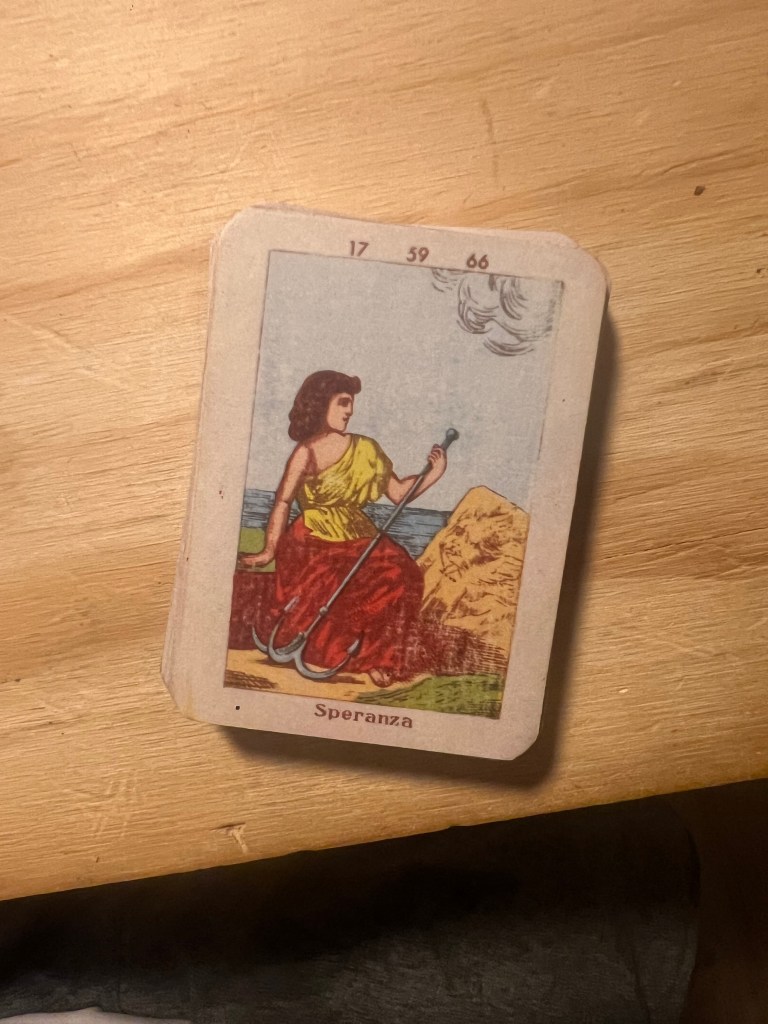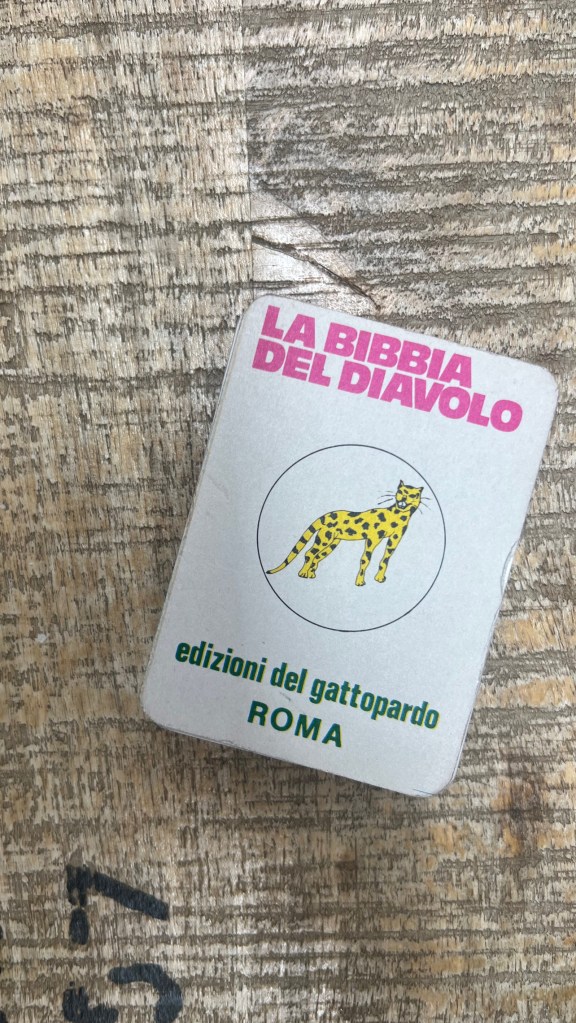
There’s a peculiar allure to the act of divination, an atavistic pull nestled within the deepest recesses of our psyche. I’m not referring to easy credulity, nor to the cheap superstition that populates village fairs. Rather, I speak of a far more complex, almost metaphysical question that emerges when one confronts the universe of tarot, or, more broadly, of “oracle cards.” It’s tempting to dismiss it all as mere suggestion, as a trick of mirrors within our own minds projecting meanings onto random figures. But is it truly so simple? Philosophy, genuine philosophy, cannot afford the luxury of such simplification. We must inquire why, despite our presumed rationality, the human being continues to seek answers in signs and symbols, in sequences that seem to defy the logic of linear causality. Consider oracle cards themselves; by their very nature, they do not claim to predict the future with the precision of a weather forecast. Their power lies instead in their capacity to serve as catalysts for reflection, as detonators for insights that would otherwise lie dormant. Is this not, ultimately, one of philosophy’s noblest functions? To shake our certainties, to confront us with the unknown not with fear, but with the explorer’s curiosity? Then there’s the causality of life. How much of what befalls us is truly the result of a logical concatenation of events, and how much is pure contingency, an unpredictable ballet of factors that elude all attempts at control? Tarot, in its apparent irrationality, forces us to confront this uncomfortable question. It offers no easy answers, but rather suggests unexpected connections, opening glimpses into possible scenarios that our minds, trapped within the mundane, scarcely conceive. And here, the reading of figures comes into play. Each arcane, each symbol, is not a mere illustration, but an archetype, a concentration of meanings stratified through time and collective psyche. The Empress, The Fool, The Devil: these are not just characters, but incarnations of forces, tensions, and dynamics acting both within and beyond us. The “reading” is thus not a passive act of reception, but an active interpretation, a hermeneutic dialogue between the reader and the cards, between the self and the unconscious that the figures evoke. It is a process requiring not only knowledge, but also sensitivity, intuition, a certain “disposition” to listen to the unforeseen. And what of the numerology inherent in tarot? The order of the major arcana, the sum of digits, the numerical recurrences. It’s a sort of secret language, a hidden syntax suggesting an internal coherence, a structure that evades pure randomness. This is not about assigning an esoteric value to numbers, but rather recognizing within them a principle of organization, a human attempt to impose order upon chaos, to find a resonance between the micro and macrocosm. In this sense, numerology in tarot can be seen as a remnant of pre-scientific thought that sought in numerical correspondences the keys to understanding the universe.

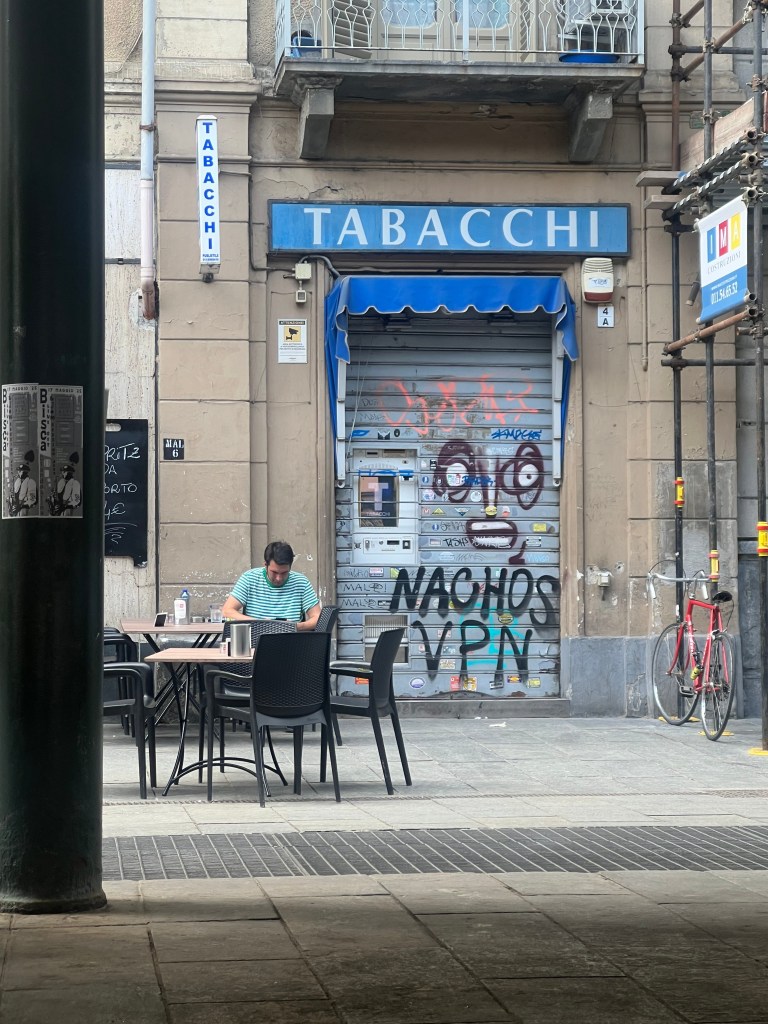
Yet, let us push further. Let us shift the lens, observing how the very idea of tarot, of oracle, of inescapable contingency, permeates an entire culture. Italy, with its myriad facets, its manifest contradictions, is it not itself a gigantic, living deck of tarot cards? Consider Naples. A city where superstition is not a folkloric whim, but an organic component of daily life. The red horn, the smorfia, the cult of the dead mingling with vibrant life: are these not the symbols, the archetypes of a people who know how to recognize the unpredictable, who have learned to coexist with the casualty of life not as a flaw to be eradicated, but as an existential condition? In Naples, every corner, every face, every unexpected event is a card drawn from life’s great deck. And then Sicily, the land of storytelling par excellence. There, it is not so much “what will happen” that matters, but rather “how it ends is what gets told.” A destiny is not predicted, but narrated a posteriori, woven into the fabric of a story that renders it comprehensible, if not always just. Is this not a form of retro-cognition, an on-the-fly interpretation of the sequence of events that comprise our existence? Life is not a linear path, but a series of draws from an unknown deck, whose figures only acquire meaning when the game is over and the plot can finally be woven. This casualty of ultimate things, typical of Italian character, is perhaps the true hallmark of our relationship with destiny. A fatalism not resigned, but rather active, which accepts the unforeseen and incorporates it into its own narrative. The Italian, ultimately, is a self-cartomancer, a constant interpreter of the cards life deals him. He seeks not absolute certainties, but rather patterns, resonances, suggestions to orient himself in the grand game of existence. And in this, perhaps, we are all a little bit tarot, a little bit oracle, in a continuous and fascinating dialogue with the unknown.
Ultimately, to approach tarot from a philosophical perspective means to move beyond the sterile dichotomy between faith and skepticism. It means recognizing their potential as tools for introspection, as generators of alternative narratives about our existence. Not as infallible oracles, but as complex mirrors reflecting our incessant search for meaning in a world that, often, seems devoid of predefined answers. And perhaps, precisely in this search, in this inexhaustible questioning, lies the true, inescapable magic of tarot.