
October 2025, the world is burning. Wars intertwine like inflamed veins: Ukraine, tormented by an invasion I have personally witnessed, yet there is Chernobyl, a place where nature reclaims the space denied by humanity, but only after paying the price for our anthropocentric delirium. The Middle East, with its cycles of violence that swallow human and non-human lives in equal measure—farm animals bombed, packs of stray dogs wandering through ruins, ecosystems devastated by drones and and landmines. And then, the silent wars: the climate war, which floods islands and burns Amazonian forests; the economic one, which pushes billions toward industrial diets based on animal suffering; the internal one, which has seen me, the writer, attacked in every possible way.
Yet, right now, in this chaos, it is fundamental to talk about plant-based nutrition and animal rights. Not as a luxury for intellectuals or a fancy for urban hipsters, but as an ontological, ethical, and political imperative. Antispeciesism—that radical rejection of discrimination based on species, which I have theorized in my work—is not an isolated chapter of moral philosophy. It is the core of a revolution that questions our entire way of existing on the planet. Because, while bombs fall, species die in slaughterhouses at a rate of 70 billion per year (FAO data 2024), and every steak is a brick in the construction of an ecological collapse that amplifies wars. Militating for antispeciesism means militating for peace, for justice, for a future where humans and non-humans are not enemies, but companions in a shared destiny.
From Bentham to Regan: The Philosophical Detonator
Let’s start from the beginning, because antispeciesism is not a postmodern invention, but a red thread connecting the 18th century to 2025. In 1975, Peter Singer published Animal Liberation, a book that is not just a philosophical text, but a detonator. A committed utilitarian, Singer drew upon Jeremy Bentham—that genius of 1789 who, in An Introduction to the Principles of Morals and Legislation, posed the fateful question: “The question is not, Can they reason? nor, Can they talk? but, Can they suffer?” Bentham, a precursor of antispeciesism, understood that suffering is not a human privilege. Singer radicalizes it: he extends the “principle of equality”—forged for race, gender, class—to non-human species. It’s not about abstract rights, but about ethical calculations: the pain of a cow in a factory farm weighs as much as that of a factory worker. The book sells millions of copies, inspires PETA (founded in 1980), and gives rise to a movement that, as Ingrid Newkirk notes, “has saved more lives than bombs have destroyed.”

But Animal Liberation is not just theory. It is a cry against “speciesism,” a prejudice Singer defines as “a form of racism.” In a post-Vietnam world, where images of napalm on Asian villages shock consciences, Singer connects animal oppression to human oppression: both rooted in a patriarchal and capitalist dominion. Today, in 2025, this link is more evident. The war in Ukraine has interrupted grain supply chains, driving up animal feed prices and accelerating deforestation in Brazil for livestock soy—80% of the world’s soy goes to cattle, not humans (WWF, 2024). In talking about plant-based nutrition, Singer teaches us that a plant-based diet is not asceticism, but strategy: it reduces CO2emissions by 70% (IPCC, 2023), frees up land for reforestation, and breaks the cycle of dependence on a predatory agriculture that fuels conflict.
However, Singer has his limits. His utilitarianism, though powerful, calculates suffering without granting “inherent rights” to animals. This is where Tom Regan comes in, with The Case for Animal Rights (1983), which flips the script: animals are not means to a human end, but subjects-of-a-life, bearers of inherent value. Regan, influenced by Kant but de-Kantianized, argues that those who have “preferences”—a pig fleeing the butcher—deserve absolute moral protection. This shift from utilitarianism to deontology is crucial for contemporary antispeciesism: in times of war, where bodies are reduced to statistics, Regan reminds us that every life counts, human or not.
The Action Front: ALF and Ethical Guerrilla Warfare
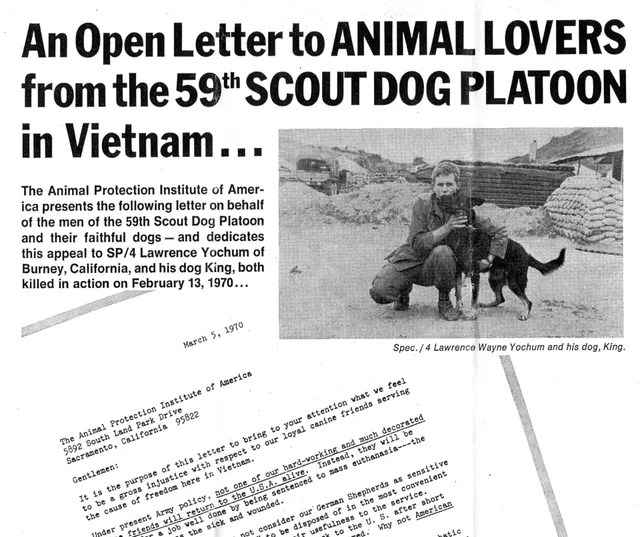
If Singer lit the fuse, the Animal Liberation Front (ALF) was the explosion. Founded in 1976 by Ronnie Lee in England, the ALF arose from the ashes of the Band of Mercy, a 19th-century group that sabotaged fox hunts. Lee, imprisoned for freeing cats from a laboratory, codified the ALF principles: 1) Liberate animals from places of suffering; 2) Inflict economic damage on those who exploit them; 3) Reveal the horror to the public. Decentralized, leaderless, the ALF spread like a virus: in 1977, the first raid in the USA, with the liberation of two dolphins from an aquarium in Hawaii (Wicklund and Stallwood, 2004). In the ’80s, the ALF struck: theft of rabbits from Huntingdon Life Sciences, sabotage of vivisections in Europe. The FBI labeled it “domestic terrorism” in 1987, but for activists like me, it is ethical guerrilla warfare.
In the ’90s, the ALF evolved: in the UK, the Animal Rights Militia (an armed branch) threatened vivisectors; in the USA, raids on fur farms in Michigan freed 4,000 mink. But the price is high: arrests, like that of Rodney Coronado in 1992 for an arson at Michigan State University. Yet, the successes: the closure of cosmetic laboratories in the 2000s, thanks to ALF pressure that inspired the EU ban on animal testing (2013). Today, in 2025, the ALF is global: in Brazil, liberations from illegal slaughterhouses during deforestation; in India, raids against cruel festivals. Recently, an operation in California (2024) rescued 500 turkeys from a Tyson farm, exposing abuse via drones—technology that, ironically, we also use in war.
But the ALF is not just action: it is embodied philosophy. As I wrote in Vegan (Einaudi), antispeciesism requires “daily militancy,” and the ALF is its vanguard. In times of war, the ALF intervenes where states fail: in Gaza, anonymous activists document the massacre of zoo animals (2023-2024), while in Ukraine they provide logistical support for animal shelters. Yes, the FBI talks about “ecoterrorism,” but as Bron Taylor notes in Behind the Mask (2004), the ALF has zero human casualties. It is sabotage, not violence: it breaks chains, not bodies.
Intertwined Lives: From Derrida’s Gaze to Haraway’s Tentacles
We must understand why plant-based nutrition and animal rights are also essential for human ethics. Bentham, as mentioned, grounds empathy in suffering: not Cartesian reason (“animal-machines”), but shared pain. This thread leads to Singer, but also to Jacques Derrida, who in The Animal That Therefore I Am (2006) deconstructs anthropocentrism. Derrida, playing with Descartes, reveals “speciesism” as a veil: the animal is not the “other,” but our repressed mirror. Animals are beings who question our finitude. In war, thinking of Derrida, we know that the drone that kills a child kills something else too—violence is always interspecies.

Thus, Donna Haraway, in When Species Meet (2008) and Staying with the Trouble (2016), shifts the paradigm: not abstract rights, but “companion species.” Humans and dogs, bees and flowers: we are interwoven in relational “tentacles” (A Cyborg Manifesto, 1985). Plant-based nutrition? Not abstinence, but alliance: eating plants is dialoguing with the soil, not dominating it. Haraway criticizes Singer for his “neutral calculation,” proposing a “multispecies” ethic that, in 2025, fights agricultural AI—drones that “optimize” farming, making suffering invisible.
These thinkers—Bentham the utilitarian, Regan the deontologist, Derrida the deconstructionist, Haraway the posthumanist—form a powerful canon, more relevant than ever today. I add Carol Adams (The Sexual Politics of Meat, 1990), who links speciesism to sexism: the body of the cow is the body of the woman, both objectified. And Judith Butler, who in Frames of War (2009) extends “precarity” to non-human life: in Ukraine, refugees carry their animals, challenging the boundary between “life worthy” and “life sacrificable.”
Veganism as a Strategy for Peace
Why talk about plant-based nutrition in 2025 while the world collapses? Because it is the antidote to chaos. The FAO estimates that livestock contributes 14.5% of global emissions (2024), but recent studies (Poore & Nemecek, Science2018) show that a vegan diet reduces water impact by 50%. In times of war, where drought in Africa (exacerbated by climate change from farming) triggers famines, switching to plants saves lives. Veganism is a “political movement,” not a lifestyle: it challenges carnivorous capitalism, which is worth 1.3 trillion dollars (2024).
Then, there’s my own burnout: as The Humane League notes (2025), anguish affects activists; “ag-gag laws” in the USA censor slaughterhouse videos; in Italy, agribusiness lobbies have defamed me for proposing meat taxes in TV debates years ago. Yet, there are victories: the EU reduces subsidies to farms (2024), and in Brazil, ALF activists blocked leather exports during COP30.
Why continue to militate? Because speciesism is the root of wars. Is the person who bombs a village the same one who eats a battery-farmed chicken? Perhaps: both deny the other. Antispeciesism is pacifism: it extends Gandhian non-violence to animals. In Ukraine, ALF-inspired shelters save thousands of dogs; in Palestine, documentaries about animals in Gaza (2024) have mobilized aid. The personal attacks? They made me stronger—power is exercised over the body, but resistance deconstructs it.
Militating means: educating (vegan lessons in schools, as I have proposed since 2015); sabotaging (not violence, but disruption, like the ALF); allying (with feminists, anti-capitalists, indigenous peoples). In 2025, with AI that “predicts” famines but ignores animals, antispeciesism is cyborg: Haraway-style, a human-machine alliance for liberation.

Despite the bombs, the attacks, the pain. From Singer in 1975 to the ALF today, from Bentham to Haraway, antispeciesism is the lighthouse. We talk about plant-based nutrition because it is nourishment for a wounded world; we militate for animal rights because their freedom is ours. The revolution begins at the table, and ends in Gaza.
