«Alas, there are so many things between heaven and earth of which only the poets have dreamed. And especially above the heavens: for all gods are poets’ parables, poets’ prevarications.
Ah, how weary I am of all the imperfection which must at all costs become event!
Ah, how weary I am of poets!»
Friedrich Nietzsche, Thus Spoke Zarathustra
Context note: before the Mediterranean Sea
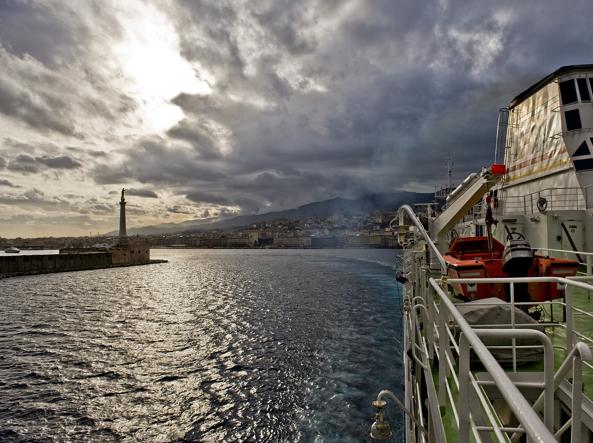
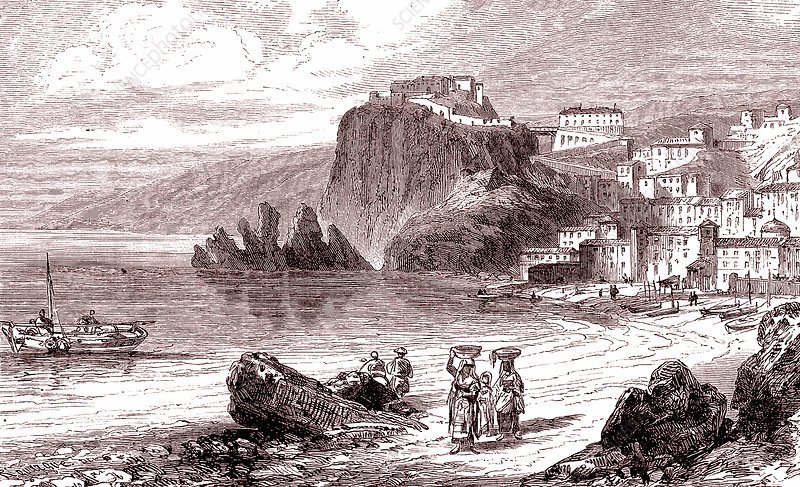
Messina and Friedrich Nietzsche: intertwined destinies. A short-lived, yet meaningful connection. In 1882, as is well known, Nietzsche stayed near the Strait and wrote several poems, the so-called ‘Idylls from Messina.’ The significance lies not in historiography, but in linguistics, as Nietzsche wrote eight poems—his only foray into the genre—while gazing upon the Mediterranean. Why? Nietzsche, like all great geniuses, had many obsessions, and the raw power of nature, as a pure expression of the will to power, was one of them. Animality, as he termed it, appears sporadically throughout his writings, representing something from which humanity has much to learn. How? In what way? Many of his reflections on the will to power, at least according to his diaries, seem to have been sparked by his stay in Messina. 1882, after all, marks the most prolific period in Nietzsche’s philosophical career—the year in which The Gay Science and Thus Spoke Zarathustra, with their themes of the Death of God, Eternal Recurrence, and the Übermensch, were developed on Via Cesare Battisti, not far from the port. However, there is no sign of Nietzsche’s presence here (unlike in the house where he stayed in Turin). In the Nietzschean building, there’s nothing of note except a well-known rotisserie. It was on the shores of the Strait that Nietzsche wrote the ‘Idylls of Messina,’ a collection of eight poems—his only strictly poetic work. “Into an endless ennui, and a boundless abyss” writes the philosopher from Röcken in a poem, where he draws a remarkable analogy between his thoughts on animals and how he contemplated the Strait. These raw, limitless forces reveal possibilities and alternative ways of organizing life on this planet. Here’s a modest proposal of mine: alongside the arancini sold where the greatest philosopher of all time once lived, perhaps a plaque or memorial could be placed to explain the profound insights Nietzsche gained—insights about nature, animals, and ultimately, ourselves—simply by observing the Mediterranean Sea. Perhaps this quote could be used: ‘Man once asked the animal, “Why do you just look at me without speaking of happiness?” The animal wanted to reply and said, “That happens because I immediately forget what I wanted to say”—but it immediately forgot this answer as well and remained silent. Thus, man was left in wonder.
Nietzsche’s Arancini, or Scattered Dates and Extracted Insights

Summer 2023
I enter the rotisserie on Via Battisti as if it were a temple, unsure of what I’m hoping to find inside. Did Nietzsche really live here? I gaze at all the arancini, naively hoping to find one named The Gay Science, just as I once encountered a trattoria with the same name in Turin while tracing his footsteps a few years ago. But there’s nothing… no trace of his presence seems to remain here. Or perhaps this ‘nothing’ is itself the mark of his presence. Let’s take a step back, so to speak, and discuss the theory behind the arancino. We can define an ‘arancino,’ without delving too deeply into culinary philosophy, as a combination of different foods that, when perfectly fried, create a new entity with a power all its own, far greater than the sum of its parts. In an arancino, if you think about it, lies the essence of Nietzsche’s philosophy: the revaluation of old ingredients to transform them into something new. The content of the Idylls from Messina is unconventional—poems where animals and mysticism take centre stage, and they are, in a sense, linguistic arancini: a seemingly chaotic mix of words that, when brought together, produce a unique and potent flavour of philosophy.
April the 1st, 1882
Nietzsche arrives in Messina as the sole passenger on a sailing cargo ship from Genoa. The journey was long and exhausting. Stricken by seasickness, as contemporary accounts describe, he was carried on a stretcher to his hotel near Piazza Duomo.
My last attack of pain was completely like seasickness. When I awoke to existence, I found myself lying in a charming little bed overlooking a quiet square by the Duomo: a couple of palm trees right outside my window. I will spend the summer here as well.
He had been unwell for a long time, and in recent months had suffered constant pain in the form of migraines and impaired vision. He was nearing the point where many commentators might label him ‘mad,’ just a step away from becoming ‘all the names in History’ and lamenting his ‘not being God’ with the ‘dear Mr. Professor.’ He was restless and far from resembling the person he had described in his books, and needed to find better climatic conditions than those offered by the Swiss lake of his eternal return. He thus discovers the Mediterranean Sea. Just a few days earlier, he had written to a friend, ‘By the end of the month, I’m going to the edge of the world… if only you knew where that is!’ At only 38, he has come to understand a crucial point that undermines part of the intellectual structure he’s been constructing: the cyclicality of time is a mainland luxury, whereas here in Sicily, time seems to have ceased to exist.
Juicy and round Messina orange
Paul Rée writes to Nietzsche in Messina:
“Dear Messinese! Long live the most beautiful, juiciest, and roundest Messina orange, and may its only shadow be that of the umbra realis! How is it possible! With your decision, you have caused the utmost astonishment and disappointment to the young Russian. She is now so eager to see you and speak with you that she wanted to stop by Genoa on her way back and was very upset by your disappearance. She is an energetic soul, incredibly intelligent, with all the traits of a young girl, or rather a child.
…
Did you not bring your typewriter with you? Is it completely out of commission? The Wagners must have been in Messina just when you were there. The second daughter (Blandine?) has become engaged to a Sicilian count.”
From this letter, we learn several things. One is about a romantic entanglement involving Nietzsche, Lou Salomé, and the letter’s author. More importantly, it suggests that Richard Wagner might have been in Messina at the same time as Nietzsche, and that the philosopher, as usual, might have followed him, driven by his obsession with the most famous composer of all time. From April 10 to 13 of the same year, Wagner stayed with his wife Cosima Liszt near the Strait, but it is not known if they met. (He had been in Palermo to finalize “Parsifal.”) The Valkyrie swim likely never took place, but we like to imagine it, thinking back to the famous Turin episode where Nietzsche, wrapped in a plaid and on the brink of madness, played the piano and pointed to a photo of Wagner, exclaiming, ‘I knew him!’
Scirocco
Nietzsche seems to love Messina so much that he considers it his ideal and favourite place. But he doesn’t yet know what the scirocco truly is, and we’re accustomed to his exaggerated enthusiasm for every new thing he sees and experiences. Then, as is often the case with narcissists, comes the disappointment. In fact, he would later write to a friend that he was beginning to…
feel like I’ve had more luck than good judgment in this—because Messina seems tailor-made for me. The people here have shown me such kindness and care that the most amusing thoughts have crossed my mind (who knows, for instance, if someone might be following me on this journey, trying to buy me the favour of these people?).
Suddenly, on April 20th, he left for Rome. His friend Malwida von Meysenbug wrote to Olga Monod-Herzen: ‘Guess who I spent a few hours with yesterday at Villa Mattei, and who I’m expecting again this evening? Nietzsche. After Rée left Genoa, he went to Messina in Sicily, a city he liked immensely. But the frequent scirocco, which he can’t tolerate, drove him away, so he returned, arriving here from Naples, to continue on to Switzerland.’ Nietzsche was practically obsessed with the Messina scirocco because it was proof that even in the heart of an earthly paradise, a touch of hell must always make itself known. On May 8, 1882, in Lucerne, he wrote, ‘The scirocco is still all around me, my great enemy, even in a metaphorical sense. I always end up thinking: «Without the scirocco, I would be in Messina».’ Then, on February 1st of the following year, writing from Rapallo, he added, ‘As for the climate in Rome, of course I’m concerned: the delicate machinery of my brain can only function properly in a few places. Last time, it was that same SCIROCCOthat drove me out of Messina: I encountered it again in Orta, then in Lucerne—and finally, it tormented me thoroughly even in Germany (in the form of Miss Lou Salomé).’
Dying in Messina
It seems that during a swim in the Strait of Messina, Nietzsche almost drowned. The philosopher came perilously close to drowning in the Strait of Messina during a swim – he was frail and not very athletic – but was saved by a dog whose barking alerted him to a whirlpool that could have swallowed him. Once again, animals were intertwined with Nietzsche’s fate. What is this series of Mediterranean poems, if not a celebration of animal life over human life?
Angiolina
This was the name of the brigantine he boarded, and also the title of one of his poems. Initially, he stayed at the “Leon di Francia” hotel, spending his days walking by the sea and hiking on the hills behind the city. In Messina, in one of the fragments published posthumously, while drafting some reflections for The Will to Power (a book he never completed), he mentioned Castel Gonzaga, the ancient fortress overlooking the city, as the place of his “enlightenment” as both a man and a philosopher. It’s not the first time Nietzsche translated his philosophical theories into architecture; as is well known, the Mole Antonelliana in Turin was, for him, the tangible expression of the will to power. Without fear of contradiction, and somewhat reluctantly, I would dare say that Nietzsche would have been quite fond of the bridge over the Strait of Messina.
Nietzsche’s Arancini, or Some Philosophical Connections
Summer 2023
As I search for an arancino with a special name at the rotisserie, my mind is focused on something else: what does Messina truly contribute to Nietzsche’s philosophy? We know that the Idylls were written in Genoa and are named “from Messina” more out of tribute than genuine connection. Let’s keep that between us, but that’s the truth. Legends aside, Nietzsche spent very little time in Messina, and it might be a bit of a stretch to think that his 1882 masterpieces could have genuinely benefited from the Mediterranean atmosphere. By that time, Nietzsche had already retired from teaching, officially citing migraines. Wandering through Messina at thirty-five—three years younger than Nietzsche was then—provides me with a frame of reference to better grasp his condition. In this place, he wrote that he managed to “dance his life,” yet the man finishing those Ligurian-Sicilian poems was deeply unhappy – prematurely retired, on the verge of a nervous breakdown, ready to introduce the idea of a new man into the History of Philosophy—a concept that would soon ignite the social upheavals of early 20th-century Europe. Tracing Nietzsche’s European travels—from the Engadine and the Riviera to Saxony and Piedmont—one can very often link his intellectual phases to specific places. But what did Messina truly represent for him? Nietzsche described himself as “the most silent of men,” and perhaps this self-description is relevant only to the poetry he completed in Sicily before his dramatic shift toward superhuman theories.

April 2024
One hundred and forty-two years have passed. I arrive in Messina in a situation not unlike Nietzsche’s. As I read one of the Idylls on the ferry, I realize that, ultimately, these poems are all tied to the idea of producing stability in the flux of existence. Standing here, as I recite “Albatross,” I find myself thinking aloud that Nietzsche is, in essence, giving birth to Heidegger.
O albatross! I’m swept up to the heights by an eternal instinct! I thought of you: then tear After tear began to flow—yes, I love you!
Bird-Opinion. Murmuring to myself, when Under dark trees I took a seat, I heard ticking, a faint ticking then, Delicate, as a measure and a beat. I got angry, grimaced a bit, There was nothing I could do, Until I, just like a poet, Spoke in that ticktock, too. I kept making verses, yet Syllable by syllable out they sprung, I had to laugh suddenly—laughter let Out fifteen minutes long. You a poet? You a poet? Are you so sick in the head? — “Yes, sir! You are a poet!” — Thus the woodpecker said.
Nietzsche, through poetry, is beginning to shape the impossible idea of the death of God, which will come to dominate Thus Spoke Zarathustra. The opinion of a bird… followed by a sudden burst of laughter. Here lies the essence of the philosopher who Gabriele D’Annunzio, in a piece of rare ugliness, would later call “the destroyer.” Perhaps the Strait of Messina finally takes on a tangible form in philosophy, becoming the “cadence and measure” of a civilization that would soon be truly destroyed. As Messina crumbled in the earthquake a few years after Nietzsche’s visit, the strait, like the energy described in The Gay Science, unleashed a dancing star over the Mediterranean Sea.
Juicy, round Messinese arancino
In the end, I decide to buy a vegetarian arancino. A paradox, named after a composition by Vincenzo Bellini, Norma. Nietzsche despised vegetarians; he saw those who embraced the paradox of asceticism as the worst detractors of the will to power (and he dedicated significant aphorisms to pointing out their foolishness). To prove they can resist life’s cruel pleasures, they must exert their will to power twice—first over themselves, and then over others, to appear superior. Vegetarians—children of a Socrates who chose hemlock over life. So here I am, feeling a bit disoriented. I’m not all the names of History, and lately, I’ve even been having trouble using just my own. I wrote a lot about Nietzsche when I was younger. But now, I find myself comparing myself to Nietzsche as my peer—we have similarities. He was certainly smarter, but also a bit more of a mythomaniac, with a few screws loose. And yet, as he approached forty, he was basically already out of the game: rejected by academia, with a conflicted reputation, and that underlying delusional streak that would later culminate in Ecce Homo, where he boasted about imaginary successes around the world—ironically, successes that only truly came after his death, and thanks to his sister. He, too, ultimately drawn to the Mediterranean as a kind of promised land for his transvaluation of all values… that epistemological leap foretold in On The Genealogy of Morals, which ended up so poorly resolved in an interrupted philosophy and in a Europe both incredibly violent and deeply Nietzschean. Sicily, with Messina as its odd point of discharge, becomes the theatre for these contradictions. Good and evil replaced by the useful and the useless, beauty that becomes intensely aesthetic but far removed from the sublime, and every category of industrial spirit frozen in a here and now that halts the wheel of Lake Silvaplana. Maybe I’ve figured it out: Sicily is proof that Nietzsche’s philosophy was flawed, which is why he fled.

‘An eggplant arancino, please.’ ‘Here you go.’ ‘It doesn’t contain meat, does it?’ ‘Not at all.’
Scirocco
As a child, the scirocco often seemed to me to be none other than the voice of that God Nietzsche declared dead and buried. There is no climatic peace in the realms of the spirit, especially in places where impossible dreams have been woven. Some claim that Nietzsche was in search of the photographer and baron Von Gloeden, who was, at that time, leading an artistic campaign to redefine beauty using Sicilian youths as metaphors. Others suggest that his letter to Peter Gast—where he wrote, “Nausicaa is always hovering around me”—was proof of his intent to recreate Goethe’s Italian Journey. What really matters, however, is recognizing that Nietzsche was an indecisive person with grand, unfinished projects, and like all inconclusive figures, he blamed his failures on external forces – in this case, “the scirocco.” In this unusual stream of consciousness, so unlike my other writings and musings on Nietzsche, I would suggest that this man loved Messina and Sicily so deeply because, like ours, his nature was fundamentally flawed. It is indeed through the lens of failure as a philosophical concept that one can truly grasp the essence of the Mediterranean. The Idylls, if we continue this line of thought, are a hidden transposition of the impossibility of capturing a singular image of the world. We are compelled to observe the world from within, attempting to pin down the stages of the constant flow of events and happenings, all while relying on a naïve notion of linear time. The first stanza of “Prince Freebird,” which was indeed included as an appendix to the second edition of The Gay Science (1887), clearly reflects this:
I’ve forgotten aims and harbours deep, Forgotten fear, praise, and penalty: Now I fly to every bird.
The harbour of a unified understanding of the world remains hidden; all we can do is follow the flow of events and let them lead us in their dance.
To die in Messina
Leonardo Sciascia once said, ‘Messina doesn’t exist.’ Perhaps Nietzsche truly came close to dying in a place that doesn’t exist. The Idylls from Messina oscillate explicitly between life and death, existence and non-existence—themes that were about to become central to Nietzsche’s philosophy and, by extension, to the dawn of the twentieth century. In these quasi-Messinese poems, being and stability serve as a kind of synchronic, illusory state that we mortals can perceive. Yet poetry, as pure vital energy and philosophy striving to grasp the world as a whole, clashes with the becoming of the Strait, which no longer resembles a destructive stream of consciousness (typical of Nietzschean philosophy) but rather a project that is truly a dream made in Sicily. Not a naïve Candide-like dream, but still a dream. A project that is evidently characterized by the idle incoherence of becoming itself, by the ‘comu finisci si cunta’ (‘how it ends is what counts’) typical of Sicily, still fresh from Arab dominations.
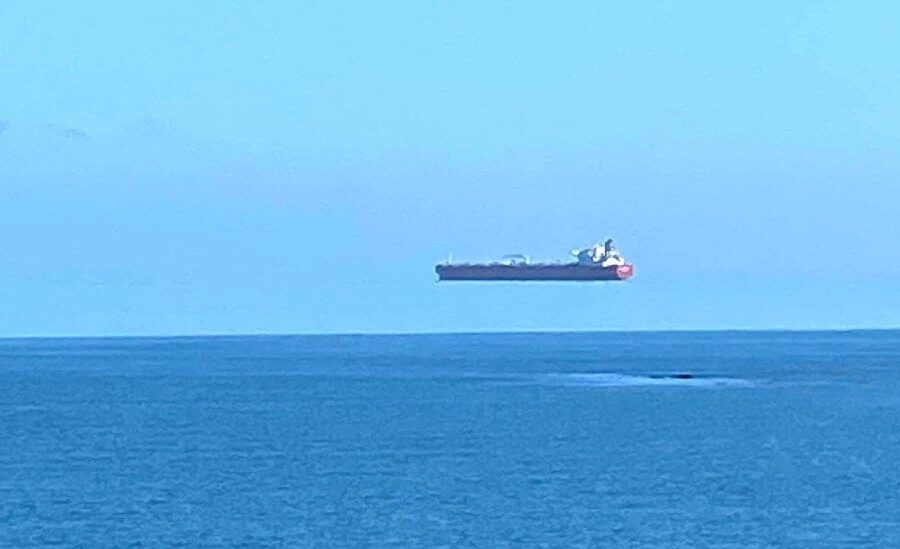
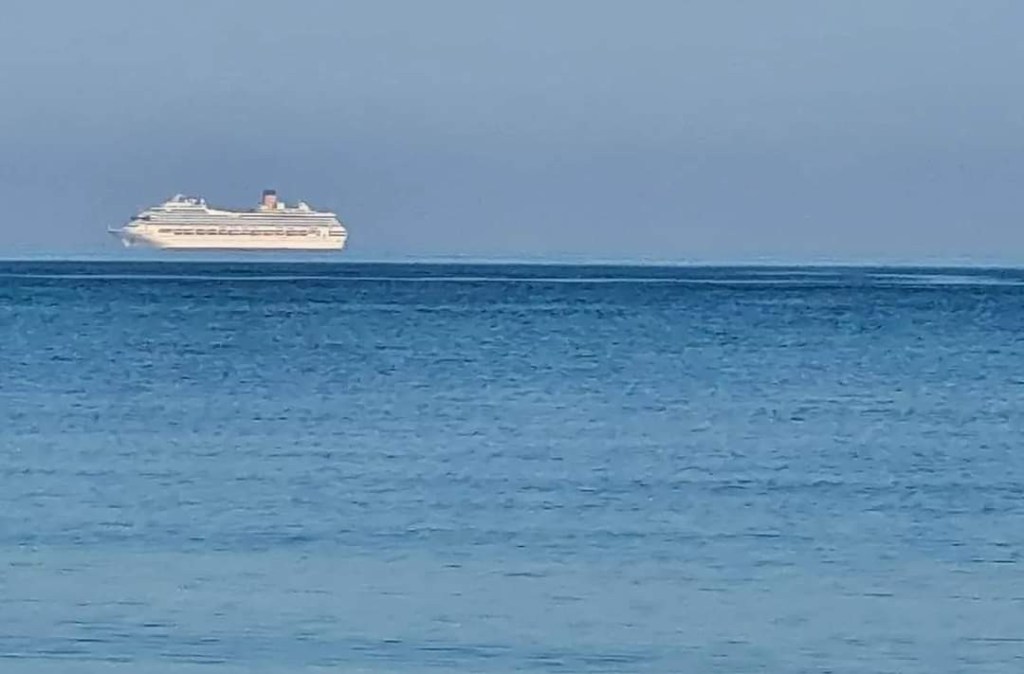
Morgan le Fay
The ferry that crosses the strait and takes me to Messina is named Morgana, just like my daughter. I’m not arriving on a stretcher like Nietzsche—at least not physically. But I, too, am exhausted and honestly at risk of losing my sanity. “No other period of his life caused his biographers such embarrassment,” Koehler writes about Nietzsche in Messina. Reflecting on what I know about him and about myself (which, as philosophers, is the only thing we do), I realize that I, too, now have more embarrassment than will to power. Yet Guy de Pourtalès, who wrote one of the most profound and beautiful books on Nietzsche, asserts that “it was in Messina that Nietzsche began to dance with his work and thought.” This is because Messina is either a prelude to crisis or perhaps even a Fata Morgana—a mirage of land on the sea, an illusion of walking where others have sunk. In reality, we know little about what Nietzsche did in Messina, apart from speculation. Some suggest he wanted to stay unnoticed, and the evidence is that he was so discreet that his visit left no trace, not even in the writings of the German ambassador of the time, August Scheneegans. I don’t believe it. Nietzsche had many desires, but being unnoticed was not one of them. The truth is more nuanced: in Messina, Nietzsche began to fade away, to disappear into the abyss, to turn into something other than himself. In Messina, Nietzsche starts to become Morgan le Fay, transforming into a poet and something beyond himself.
Nietzsche vastaso, or uncouth Nietzsche
The nocturnal mystery
This unusual Idyll almost seems to describe the death of Pier Paolo Pasolini. After all, Ostia is a Mediterranean beach. A man struggles to sleep, despite a deep desire to succeed. He goes down to the beach, a kind of epistemological panacea for Sicilians. He sees a man launching a boat into the sea, and indeed, the next morning, the boat is on the water but covered in blood. Blood everywhere. Yet everyone was asleep, sleeping peacefully. What is the role of the person who went down to the beach? Did he commit the murder? Was he merely an awake observer of consciousness but dead to unconsciousness? What metaphor do drowsiness and insomnia trigger in this vision? What are we supposed to awaken from? Is he the spectator of an Italian opera? This is the theatre of life creeping in. We’ve slept for too long, and too many murders have been committed—of freedom, conscience, and the ability to freely govern our own lives. Here is all of Nietzsche’s fury against the psychologists of morality, the Christians and Jews, the Socratic philosophers… In the metaphor of the sleeping man watching a boat being launched with no sailors left aboard, we see the full force of his final transvaluation. The site of the scandal is the Mediterranean Sea, just as the site of perfect time was Lake Silvaplana. Thus journeyed Zarathustra, moving between poetry and summer dreams, between the figures of the doctor and the poet, both embodied in Zarathustra. Nietzsche once wrote to Malwida von Meysenbug, saying he needed a ‘constantly blue sky to endure life,’ and here, frozen in place, is an entire theory of poetic creation that is also a quest for physical and, ultimately, metaphysical healing. ‘To become my own physician’—this was Nietzsche’s wish, and this is what the meeting of poetry and Sicily was in his brief life. Before everything fell apart in his final years, it is not hard to see the Idylls as the bridge connecting the poet—on one side a healer and physician, and on the other a dangerous purveyor of poisonous truths—to the Strait of Messina: a calm blanket of heavenly blue skies, yet also a place of sudden storms and devastating earthquakes. Nietzsche claimed that in Italy, God had died sooner and more decisively than anywhere else, so it was only natural that his life’s compass and philosophy pointed south. In Messina, Nietzsche realized that passions and instincts were still possible as a way of life, and that the disruptions to family and social order, which usually produce feelings of guilt, were much milder here than in Germany. Sicily, much like the arancino I’m biting into now and which has served as a metaphor throughout these pages, became for Nietzsche the stage for free spirits, to whom he would later dedicate Ecce Homo, starting from its subtitle. It is here, in this land of contradictions and freedom, of turbulent seas and unbearable scirocco winds, that Nietzsche envisions reshaping his life once and for all. He sees his academic commitments in Basel as a waste of time, and despite having followed them this far, resolves to distance himself from the Wagnerian circle. He dreams of marriage, falling in love, living life rather than merely describing it—before illness ultimately cuts him short. These may as well be all daydreams, unrealized and shipwrecked, but for that very reason, so important: they have been turned into books that chart a universal path from this personal dream. Everything is mixed and fried for a higher purpose, where good and evil give way to a present moment as rich as the stormy Mediterranean… Nietzsche, or how even an arancino can turn out well in Saxony.