
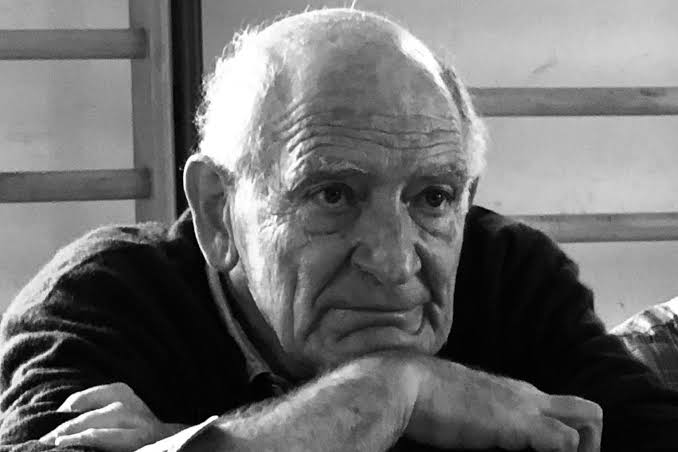
Paolo Virno died yesterday at 73. His trajectory spans 1968 to 2025 and breaks into three precise blocks: Potere Operaio, prison, mature post-operaismo. Born in Naples on 5 January 1952, he joins Potere Operaio at sixteen. The group emerges in 1967 from a split in Panzieri and Tronti’s Quaderni Rossi. Core aim: politicize the working class outside the parties. Virno operates between Rome and Turin, drafts leaflets, coordinates pickets at FIAT Mirafiori. Central concept: mass worker. Not the PCI’s skilled professional, but the migrant, precarious, unskilled laborer. His refusal of work is political, not ethical. Virno writes in the weekly Potere Operaio pieces such as “The Plan of Capital and the Plan of Labor” (1971): capital dictates rhythms, the worker counters with wildcat strikes and sabotage. Figures: 1969–1970, 300,000 strike hours at FIAT. Virno is among the coordinators of the Hot Autumn. No detached theorist: he joins occupations, drafts the document “Class Struggle and Organization” (1970), which defines autonomy as worker power against state power. Potere Operaio dissolves in 1973. Reason: internal splits over violence and structure. Virno does not join the Red Brigades, rejects armed struggle. He moves into the Roman 1970s: Radio Alice, the 1977 movement. Here the insight crystallizes: language itself is already struggle.
7 April 1979: mass arrests. Virno, Negri, Scalzone charged with armed insurrection. No evidence. Virno spends three years in preventive detention (Rebibbia, Palmi). He reads Wittgenstein, Austin, Searle. Notes written in cell become Convention and Materialism (1986). Released in 1982 on statute of limitations, he refuses exile. Begins teaching philosophy of language in Cosenza, then Rome Tre (1985). The 1980s: public silence, theoretical labor. Publishes “Language as Work and as Commodity” (1980, reprinted 1986). Thesis: in post-Fordism language becomes direct production of surplus-value. Not metaphor: speaking is labor. Examples: call centers, programmers, creatives. Capital extracts value from communication, not from making objects. Virno anticipates the cognitive-labor debate by two decades.
Mature post-operaismo: multitude, grammar, exodus. A Grammar of the Multitude (2001), key text, eight chapters. Structure: chapter 1 anguish (Heidegger + Marx), chapter 2 joke (Freud + logic), chapter 3 opportunism (Hobbes + game theory), chapter 4 exodus (Bible + Spinoza). Multitude: neither “people” (fictive unity) nor “class” (confined to factory). It is plurality of singularities sharing language and general intellect. Capital exploits it but never fully controls it. Anguish: not psychological. It is the structure of post-Fordist labor: unlimited responsibility, no fixed rules. The worker must innovate continuously. Outcome: permanent exposure to risk. Joke: logical mechanism. Example: “I want a steady job… but not a fixed one!” (1977 slogan). Flips semantics, opens political space.
When the Word Becomes Flesh (2003): language equals human doing. Not tool, but biological faculty. Virno takes Aristotle’s zoon logon echon and materializes it: language is living labor. Capital captures it yet never exhausts it. Multitude: Between Innovation and Negation (2002): the multitude is active biopolitics. Not victim of power over bare life (Foucault), but agent that redefines bios through logos. Negation is not mere logical abstraction: it is political act. Chapter on non-belonging: the multitude belongs to no State, no Nation. It is perennial exodus, an “outside” that erodes borders. Against identity populisms, against neoliberal false freedom, it wields plurality as blade. The multitude is the site of difference, not unity. Concrete cases: Zapatistas, 2001 No Global movement, Roman peripheries. Classroom at Rome Tre: not lecture, assembly. Students and workers debate public intellect: diffuse knowledges that capital steals yet can be reappropriated.
Exercises in Exodus (1996), drafted in prison: exodus is not individual flight but collective withdrawal from value-logics. Sabotage from within. Déjà Vu (2005): déjà vu is no pathology. It is the temporal structure of post-Fordism. Capital repeats the new to neutralize it. The multitude repurposes it to anticipate the future. Essay on Negation (2018): negation drives change. Not Hegelian synthesis but linguistic friction. The “no” is performative act that generates alternatives. Wordliness (1994): the world is no backdrop. It is network of linguistic relations. Capital privatizes it, the multitude communalizes it.
Final works 2020–2025: essays on climate crisis and ecological multitude. Language is not merely cognitive: it is biospheric. Green capital extracts value from environmental affects. The multitude must exodus toward planetary grammar. Virno leaves no direct heirs, only a method: read the present as linguistic factory. His legacy is a weapon, not a monument. Use it.
